
What the AI boom actually means for a small Australian business (and the 90% you can ignore)
Most of the AI hype is noise. The 10% that matters for Australian SMEs is quieter, more practical, and already affordable. Here's how to tell the difference.
If you run a small business in Australia and you've been within ten metres of a news feed in the last two years, you've been shouted at about AI. Boards are nervous, journalists are breathless, and there's a steady drumbeat of "if you're not using AI, you'll be left behind."
Most of it is noise. The honest version is quieter and more useful: a small slice of what's actually shipping right now is genuinely helpful for an Australian SME, the rest is irrelevant for at least the next two years, and the trick is knowing which is which.
This post is a filter. It's written for owners and operators — not engineers, not investors — who want to spend ten minutes understanding what to ignore, what to try, and what to keep an eye on.
What's loud (and mostly irrelevant to your business)
A lot of the AI conversation in 2026 is aimed at audiences that are not you. The four loudest categories:
1. AGI debates. Whether artificial general intelligence arrives in 2027, 2035, or never has roughly zero impact on your invoicing process this quarter. It's a fascinating long-run question and a complete waste of your operational attention.
2. Frontier model launches. Every few months a US lab releases a new model that's 8% better on some benchmark. Unless you are personally building the AI product, this matters about as much to your business as which V8 engine is fastest at Bathurst — interesting, not actionable. By the time something genuinely useful lands in tools you actually use, it'll be obvious.
3. Funding-round theatre. A US startup raised $300 million at a $4 billion valuation to build "AI for X." This tells you nothing about whether AI for X is real, useful, or coming to your industry. It tells you a fund partner believed a pitch deck. Ignore it.
4. The chatbot demo cycle. Slick three-minute videos of an agent booking a flight, ordering pizza, and writing a sonnet. These are demos, not products. The agent that books your flight reliably enough to bet your business on it does not exist yet — and when it does, you'll buy it for $30 a month, not build it.
Filtering all four of these out frees up an enormous amount of mental space. None of them are decisions you need to make.
What has actually changed for Australian SMEs
Underneath the noise, three things have genuinely shifted in the last 18 months that matter for a small Australian business:
Parsing and extraction got cheap. The boring but enormous shift: pulling structured information out of messy inputs — supplier PDFs, scanned forms, email threads, photos of whiteboards, voicemail transcripts — used to require either a custom-built integration or a person. It now costs a few cents per document and works well enough to be worth using. This single change accounts for 60–70% of the practical AI wins available to a typical SME.
Local-first options exist. You no longer need to send your customer data to a US-hosted chatbot to get value from AI. Models that run on AWS Sydney, on your own laptop, or inside a closed environment are now good enough for most SME workflows. If data residency matters to you (and for trades, healthcare, legal, and anyone with government clients, it should), the answer is no longer "deal with it or skip AI."
Integration cost collapsed. Connecting AI into your existing tools — Xero, HubSpot, simPRO, Google Workspace, your inbox — used to mean weeks of custom development. Most of the workflows a typical small business cares about can now be wired up in days. That changes the maths: a $15,000 build that saves four hours a week pays back in under a year, not five.
Notice that none of these are "AI is now smart." They're "AI is now cheap and embedded enough to be useful." That's a much more important shift, and it's the one the hype cycle keeps obscuring.
The 90% you can safely ignore (for now)
Specifically, if you run a small Australian business, here are four big buckets of AI activity you can comfortably skip until at least 2027:
Building your own model. You don't need to. The models you'd want to use already exist. The work is in connecting them to your processes, not training new ones.
"AI strategy" consulting. A 60-page deck about your "AI maturity roadmap" is almost always a waste of money for an SME. The useful version is much shorter: which two workflows would save the most time if a machine handled them, and how much would it cost to try. Anyone who can't answer that in a one-hour conversation isn't going to help you.
Replacing your team with agents. The technology is not there yet for any non-trivial role. Even the best autonomous agents need supervision for anything that matters. The sustainable wins right now are augmentation — your team plus AI doing 30% more — not replacement.
Reorganising your business around AI. If a vendor tells you that to get value from AI you need to restructure your operations, change your CRM, and rebuild your data warehouse, you're being sold a transformation program dressed up as an AI project. Real wins start with one workflow and a calendar invite, not a Gantt chart.
The 10% that's worth your attention
The narrow slice that does matter for an Australian SME in 2026:
Document parsing in workflows you already do. If your team spends meaningful time pulling numbers out of PDFs, retyping supplier quotes, or reformatting client briefs, this is your first AI win. It's boring, it's measurable, it's unglamorous, and it routinely saves 5–15 hours per week per person.
Inbox triage. Not the chatbot kind. The version where new emails get classified, summarised, and routed before a human sees them — and the human just confirms the suggested action. Built well, this saves an hour a day for an owner-operator. Built poorly, it generates noise. The difference is in the design, not the model.
Drafting standardised customer-facing writing. Quote follow-ups, scope-change emails, project updates, FAQ responses. The trick is that AI drafts and a human always sends — never the other way round. This sounds obvious until you see how many vendors try to sell you the reverse.
Three questions to ask before any AI investment
If a vendor, consultant, or internal champion is pushing an AI project, three questions will save you most of the bad money:
1. What specific workflow does this replace, and what does it currently cost us in hours per week? If they can't answer this in concrete numbers, you don't have a project — you have a hypothesis.
2. Where does our data go, and is anyone using it to train future models? "It's secure" is not an answer. The right answer is a name, a region, and a yes-or-no on training. If they get vague, that's the answer.
3. What happens the day we want to turn this off? Real software lets you stop using it without breaking anything else. AI workflows that quietly become load-bearing for your operations are a much bigger commitment than they look on day one.
Three questions, ten minutes, and you'll filter out the majority of bad pitches.
The honest summary
For an Australian small business in 2026, AI is finally cheap enough and embedded enough to be genuinely useful — but only for a narrow, specific slice of work. Document parsing, inbox triage, and standardised drafting are real wins. Almost everything else in the news cycle is irrelevant to your quarter. Pick one painful workflow, scope it tightly, demand to know where the data goes, and ignore the rest.
The boring version of AI is the one that pays back. The exciting version mostly sells conferences and consulting hours. If you only do one thing this quarter, write down the three workflows in your business that consume the most repetitive time — and then ask whether the most boring 10% of AI could chip away at them.
That's the question worth answering. The rest is noise.
See if Neurastruct can help your business
Book a free 30-minute consultation
No commitment. We'll walk through your biggest admin time-sucks and whether AI is the right fit for your specific business.
Book a consultation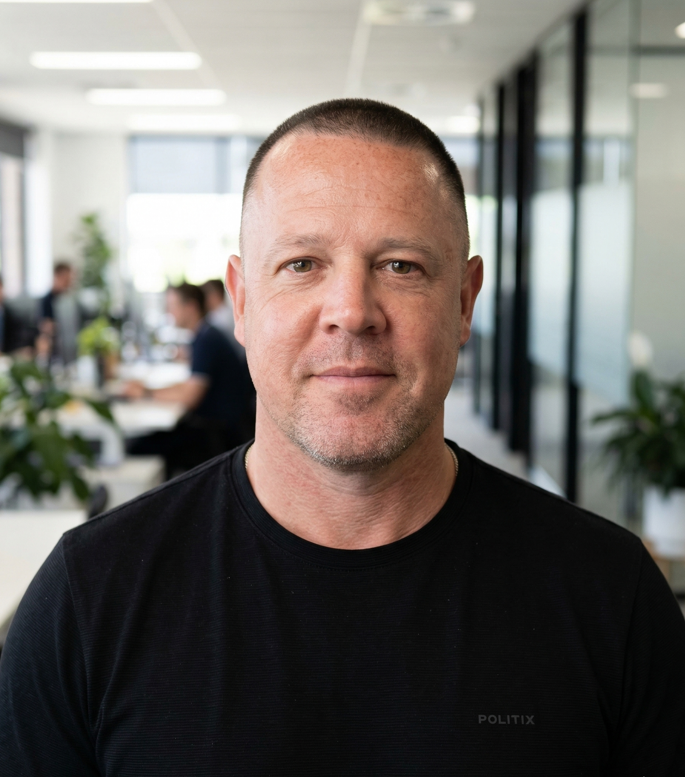
Peter McLean
Founder, Neurastruct
Australian small-business operator since 2001 and 16 years as a national account manager; AI certificates from Anthropic (2026) and Google (2025).